How Climate Technology Is Changing Agriculture
Farming has always depended on the weather. A good season can bring healthy crops, steady income, and full markets. A bad one can mean drought-stressed fields, damaged harvests, and difficult choices for farmers who are already working with tight margins.
But today’s farmers are facing conditions that are harder to predict than ever. Heat waves arrive earlier, rainfall patterns shift, pests move into new regions, and water supplies become less reliable. At the same time, the world still needs farms to produce enough food for growing populations.
This is where climate technology comes in. It is not about replacing farmers or turning agriculture into something unrecognizable. At its best, climate technology gives farmers better tools to understand their land, protect their crops, use resources wisely, and adapt to a changing planet.
Smarter Decisions From Better Data
One of the biggest changes in modern agriculture is the rise of better information. Farmers have always watched the sky, felt the soil, and relied on experience. Climate technology adds another layer: data that can reveal what is happening across a field, a region, or even an entire growing season.
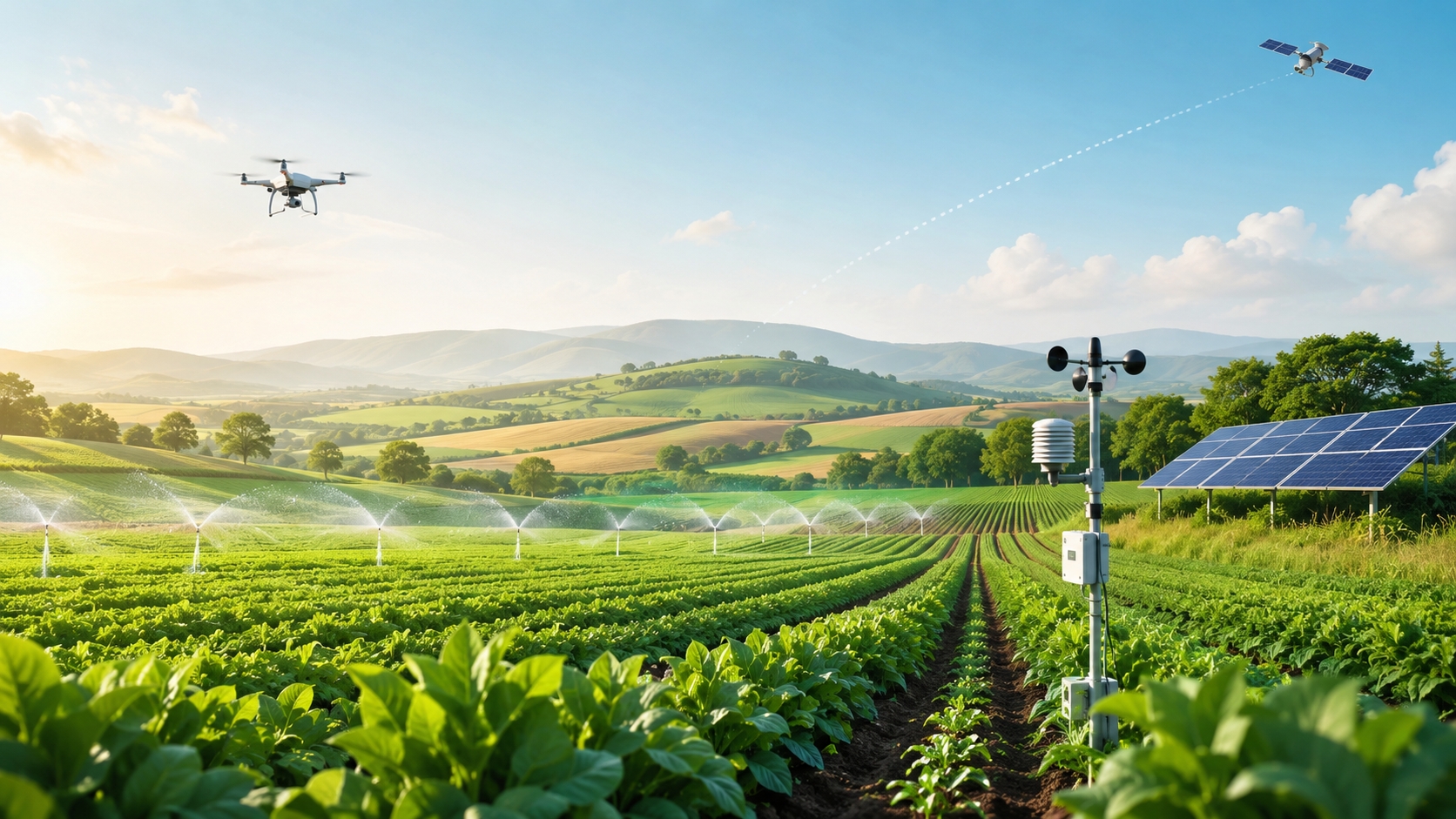
Satellite imagery, weather sensors, soil monitors, and digital mapping tools can help farmers spot problems earlier. For example, a farmer may be able to see which parts of a field are drying out faster, where crops are under stress, or where irrigation is being wasted.
This kind of monitoring is especially useful as weather becomes less predictable. NASA’s work on satellite remote sensing for agricultural applications shows how space-based data can support drought monitoring, crop tracking, and food security planning.
For large farms, these tools can guide decisions about irrigation, fertilizer, and harvesting. For smaller farms, even basic weather alerts or mobile advisory services can make a difference. Knowing when heavy rain is coming, when to plant, or when pests are likely to spread can help farmers avoid losses and reduce guesswork.
The real value is not just collecting data. It is turning that data into practical advice farmers can actually use.
Using Water and Soil More Wisely
Water is one of agriculture’s most important resources, and climate change is making it more difficult to manage. Some regions are dealing with longer droughts, while others face sudden flooding. In both cases, farmers need ways to make every drop count.
Climate technology is helping through smarter irrigation systems. Instead of watering an entire field on a fixed schedule, sensors can measure soil moisture and help deliver water only where and when it is needed. This can reduce waste, lower costs, and protect crops during dry periods.
Soil health is just as important. Healthy soil can hold more water, support stronger root systems, and store more carbon. Practices such as cover cropping, reduced tillage, composting, and crop rotation are not new, but climate technology can make them easier to measure and manage.
The World Bank describes climate-smart agriculture as an approach that connects food security, resilience, and lower emissions. In everyday terms, that means helping farms produce food while becoming better prepared for climate stress.
Technology can support this by tracking soil conditions, measuring organic matter, and helping farmers compare the results of different practices over time. That matters because farming decisions are rarely one-size-fits-all. A solution that works in one region may not work in another, and farmers need tools that respect local conditions.
Cleaner Energy and Lower Emissions on the Farm
Agriculture both feels the effects of climate change and contributes to it. Farm equipment, fertilizer production, livestock, and food transport all play a role in greenhouse gas emissions. Climate technology is helping reduce that impact in practical ways.
Some farms are adding solar panels, electric equipment, or more efficient pumps and refrigeration systems. Others are using precision tools to apply fertilizer more carefully, which can reduce waste and lower emissions. In livestock operations, improved feed, manure management, and methane-reduction strategies are becoming part of the climate conversation.
The Food and Agriculture Organization’s Climate-Smart Agriculture Sourcebook highlights the importance of making agriculture more productive and resilient while also responding to climate challenges. That balance is important. Farmers are not just being asked to “go green” in an abstract way; they need solutions that also protect their livelihoods.
For example, a dairy farm might use a digester to turn manure into energy. A fruit grower might use weather data to reduce unnecessary spraying. A grain farmer might use precision equipment to place fertilizer more accurately, saving money while reducing runoff.
These changes may sound small on their own, but across many farms, they can add up to meaningful progress.
Making Agriculture More Resilient
Perhaps the most important role of climate technology is helping farms bounce back from shocks. A resilient farm is not one that avoids every problem. It is one that can handle stress without collapsing.
This can mean planting crop varieties that tolerate heat or drought. It can mean using early warning systems for pests and extreme weather. It can also mean improving storage, transportation, and market access so food is not lost after harvest.
Resilience is especially important for smallholder farmers, who often have fewer financial resources to recover from a failed season. For them, climate technology does not need to be expensive or complicated. A reliable weather forecast, a mobile payment system, or access to better seeds can be life-changing.
There are still challenges. Some tools are costly. Rural areas may lack internet access. Farmers may need training and support before they can benefit from new systems. Technology alone cannot solve problems such as land inequality, unstable markets, or lack of financing.
Still, when climate technology is designed around real farming needs, it can be powerful. The goal should not be technology for its own sake. The goal should be stronger farms, more stable food systems, and better choices for the people who grow our food.
Conclusion
Climate technology is changing agriculture by helping farmers see more clearly, plan more confidently, and use resources more carefully. From satellite monitoring and smart irrigation to healthier soils and cleaner energy, these tools are reshaping how food is grown in a warming world.
The most promising changes are not flashy or distant. They are practical, grounded, and increasingly available: better information, better timing, better conservation, and better preparation.
Agriculture has always required patience, skill, and adaptation. Climate technology is becoming one more tool farmers can use to meet the future with resilience.