Simple Nutrition Tips for People Who Hate Cooking
Not everyone enjoys spending time in the kitchen. Some people find cooking relaxing, but for others, it feels like one more exhausting task after a long workday. If you regularly end up eating cereal for dinner, grabbing takeout on the way home, or staring into the fridge hoping a meal magically appears, you’re far from alone.
The good news is that eating reasonably well does not require elaborate recipes, expensive ingredients, or hours of meal prep. Healthy eating can be surprisingly simple once you stop thinking of it as a cooking project and start treating it as a collection of easy habits. With a few smart shortcuts and realistic expectations, you can nourish yourself without turning into someone who meal-preps on Sundays for fun.
Focus on Easy Wins, Not Perfect Meals
One of the biggest mistakes people make is assuming healthy eating has to look perfect. In reality, a decent meal can be as simple as combining a protein, a fiber source, and something fresh. That’s it.
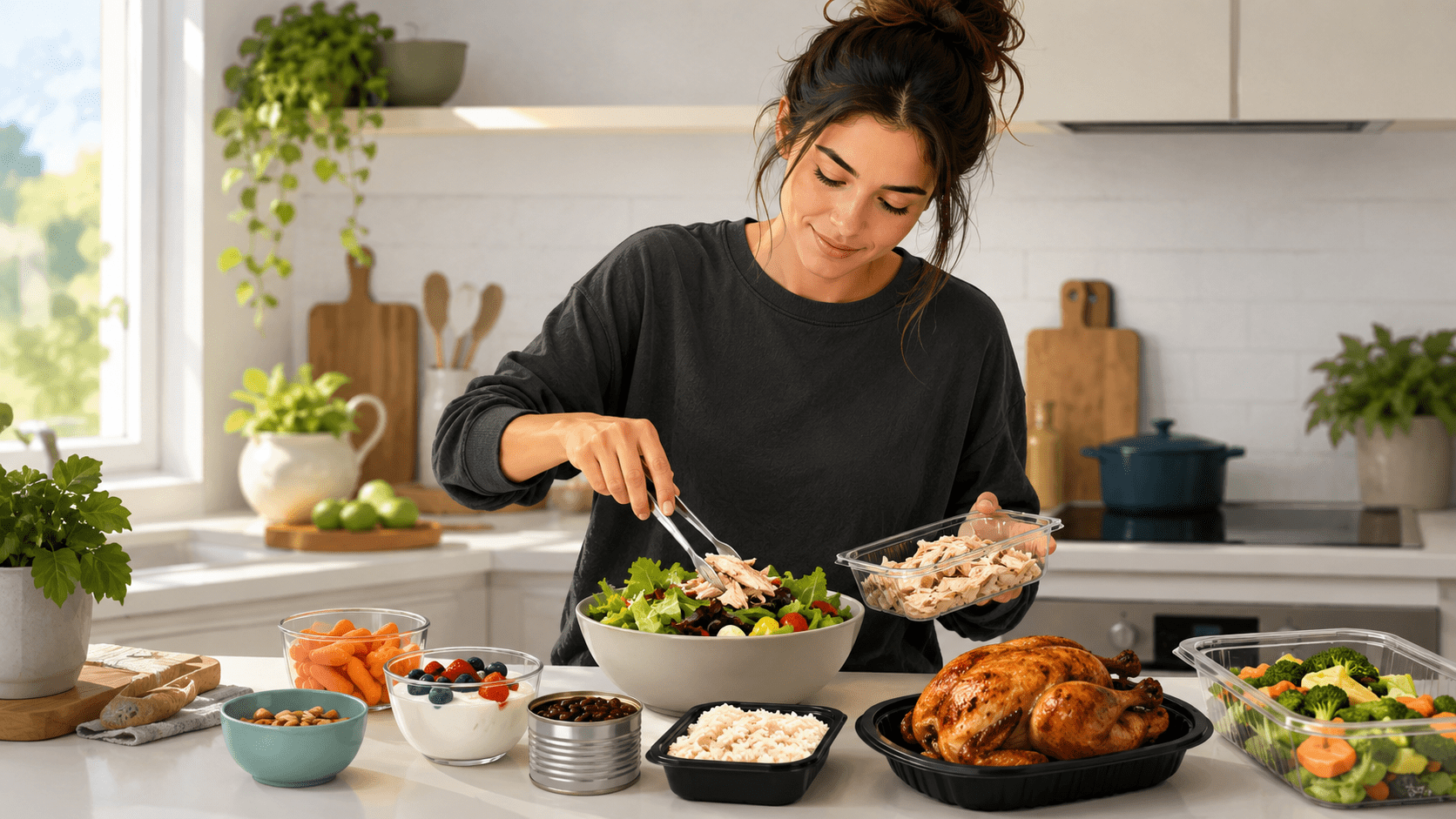
For example, rotisserie chicken with microwave rice and pre-washed salad greens is a perfectly reasonable dinner. So is Greek yogurt with fruit and nuts, or a turkey sandwich with baby carrots on the side. The goal is consistency, not culinary excellence.
The Healthy Eating Plate from Harvard Health offers a simple visual guide that works especially well for people who dislike cooking. It encourages filling half your plate with fruits and vegetables, plus reasonable portions of protein and whole grains. You don’t need to prepare gourmet dishes to follow that basic formula.
Keeping your standards realistic also makes healthy habits easier to maintain. If every meal feels like a complicated production, you’re much more likely to give up and order fast food instead.
Let Convenience Foods Work for You
Convenience foods get a bad reputation, but many of them are incredibly helpful for eating better with minimal effort. Frozen vegetables, canned beans, bagged salads, cooked grains, tuna packets, and pre-cut fruit can save both time and energy.
There’s a difference between relying entirely on ultra-processed snacks and using convenient ingredients strategically. A microwaveable brown rice cup paired with frozen vegetables and grilled chicken strips takes less than five minutes to prepare and contains far more nutrition than most drive-thru meals.
According to the Centers for Disease Control and Prevention, frozen and canned produce can still provide important nutrients, especially when you choose lower-sodium or no-added-sugar options. That means you don’t need to buy fresh vegetables every week only to watch them wilt in your refrigerator drawer.
Your freezer can become your best friend if cooking feels overwhelming. Frozen berries work in smoothies or yogurt. Frozen broccoli can be microwaved in minutes. Even frozen protein options like turkey meatballs or veggie burgers can make dinner much easier.
Think of convenience as a tool rather than a failure.
Build a Small List of “Default Meals”
People who hate cooking often waste mental energy deciding what to eat. One simple solution is creating a short list of default meals that require almost no thought.
These are meals you can assemble quickly using ingredients you regularly keep at home. Maybe it’s oatmeal with peanut butter and banana. Maybe it’s scrambled eggs with toast, or hummus with pita bread and vegetables. The specific meals matter less than the fact that they’re easy enough to make even when you’re tired.
Having a few dependable options reduces the temptation to skip meals or order expensive takeout several times a week. It also helps prevent the “nothing sounds good” problem that leads many people toward vending-machine snacks and random grazing.
Simple meals can still be balanced. The CDC recommends prioritizing foods with protein, fiber, fruits, vegetables, and whole grains whenever possible. Their healthy meal and snack guidance emphasizes that nutritious eating patterns do not need to be complicated or restrictive.
You can also repeat meals more often than you think. Many people who eat well regularly rely on the same handful of breakfasts and lunches every week. Variety is nice, but convenience is what makes habits sustainable.
Make Snacks More Filling and Less Random
When cooking feels like a chore, snacks often become meals by accident. The problem is that many snack foods are designed to be quick but not especially satisfying.
A bag of chips might temporarily quiet hunger, but it usually won’t keep you full for long. Pairing carbohydrates with protein or healthy fat tends to work better. Apples with peanut butter, yogurt with berries, cheese and crackers, or hummus with carrots all require almost no preparation while offering more staying power.
The Mayo Clinic’s healthy snack ideas include easy options like hummus, bean dips, nuts, and fruit-based snacks that are realistic for busy adults. You don’t need to turn snack time into a nutrition seminar. You just want choices that help stabilize your energy instead of causing a crash an hour later.
It also helps to make healthy options visible and convenient. Washed grapes at eye level in the fridge are more likely to get eaten than vegetables hidden in a drawer. A bowl of nuts on the counter can become an easy alternative to vending-machine snacks.
Small environmental changes matter more than motivation most days.
Give Yourself Permission to Keep It Simple
A lot of nutrition advice online feels designed for people with unlimited time, expensive kitchen gadgets, and a genuine interest in cooking. That’s not real life for many adults.
You do not need homemade sauces, complicated recipes, or perfectly balanced macro ratios to improve your eating habits. Sometimes progress looks like drinking more water, adding fruit to breakfast, or keeping frozen vegetables in the freezer instead of ordering fries every night.
Healthy eating becomes much easier when you stop treating it like a performance. Simple meals count. Store-bought shortcuts count. Effort that fits your actual lifestyle counts.
The best nutrition plan is usually the one you can realistically stick with on busy weekdays, stressful evenings, and low-energy moments. If that plan includes rotisserie chicken, microwave rice, and bagged salad, you’re doing just fine.