How to Stay Active When You Work From Home
Working from home has changed the way many people live and work. The lack of commuting, flexible schedules, and the comfort of home can make remote work appealing. But there’s one downside that often sneaks in quietly: sitting too much.
When your office is only a few steps from your bedroom or kitchen, it becomes surprisingly easy to spend most of the day barely moving. Hours can disappear between emails, meetings, and deadlines. Over time, that sedentary routine can affect energy levels, posture, focus, and overall health.
The good news is that staying active while working from home doesn’t require a home gym or a complicated fitness plan. Small, consistent habits can make a meaningful difference. With a few adjustments to your daily routine, it’s possible to feel more energized, productive, and physically better throughout the workday.
Build Movement Into Your Workday
One of the biggest challenges of remote work is that movement no longer happens naturally. In a traditional office, people walk to meetings, commute, climb stairs, or head out for lunch. At home, many of those built-in activities disappear.
That’s why intentional movement matters. Instead of waiting until the end of the day to exercise, look for ways to stay active throughout the day itself.
A simple starting point is taking short movement breaks every hour. Even standing up, stretching, or walking around the room for a few minutes can help break long periods of sitting. According to Harvard Health, extended sitting has been linked to several health risks, including poor posture, back pain, and cardiovascular problems.
Some people set reminders on their phone or computer to stand up regularly. Others build movement into existing habits. For example, you might walk around during phone calls or do light stretches while waiting for coffee to brew.
These small moments may not seem significant on their own, but they add up over the course of a week. Consistency matters more than intensity.
Create a Workspace That Encourages Activity
Your environment has a powerful influence on your habits. If your workspace encourages long hours of uninterrupted sitting, staying active becomes much harder.
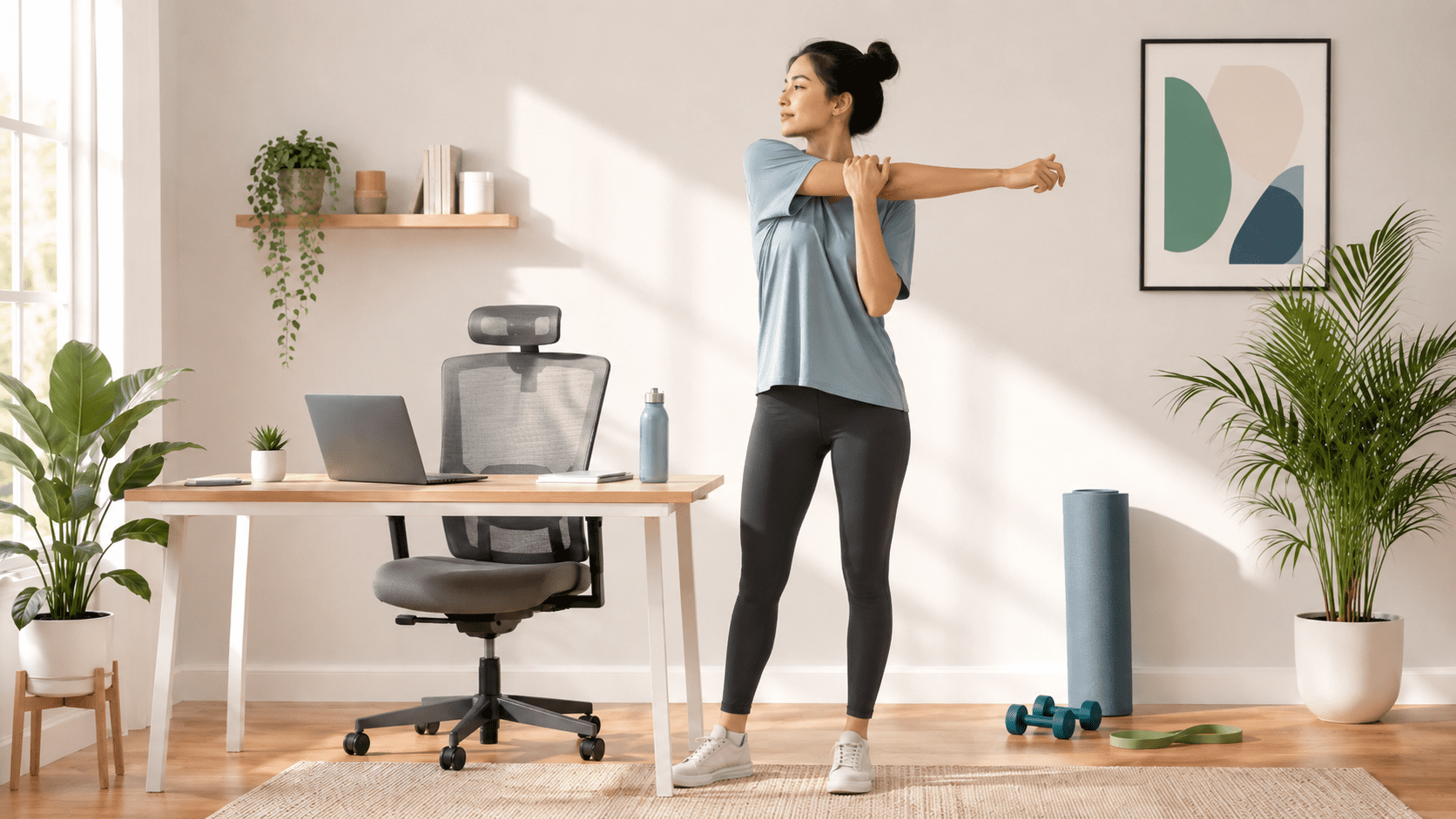
A few thoughtful changes can help you move more naturally. If possible, avoid working from the couch or bed for long stretches. A dedicated workspace with a supportive chair and proper desk setup makes movement easier and reduces physical strain.
Standing desks have become increasingly popular, but they are not the only solution. Even alternating between sitting and standing throughout the day can help. Some people place their laptop on a counter for short periods or take standing meetings when possible.
It also helps to keep simple exercise tools nearby. Resistance bands, light dumbbells, or a yoga mat can serve as visual reminders to move. You’re more likely to stretch or exercise for a few minutes if the equipment is already within reach.
Comfort matters too. A workspace that feels cramped or uncomfortable often leads to poor posture and stiffness. The Mayo Clinic notes that excessive sitting is associated with several health concerns, even for people who exercise regularly outside working hours.
Movement during the workday is just as important as scheduled workouts.
Rethink What “Exercise” Really Means
Many people imagine exercise as a long gym session or an intense workout class. That mindset can make staying active feel overwhelming, especially during busy workweeks.
In reality, physical activity can take many forms. A brisk walk around the neighborhood, a quick yoga session, dancing while cleaning the house, or even climbing stairs all count as movement.
The Centers for Disease Control and Prevention recommends that adults aim for at least 150 minutes of moderate physical activity each week. That may sound like a lot at first, but it breaks down to about 30 minutes a day, five days a week.
More importantly, those minutes do not have to happen all at once.
Three 10-minute walks spread throughout the day can still provide benefits. This flexibility makes it much easier to fit movement into a remote work schedule.
Some remote workers enjoy starting the morning with exercise before opening their laptop. Others prefer a walk after lunch to reset mentally during the day. There’s no universal formula. The best routine is usually the one that feels realistic and sustainable.
It’s also helpful to focus on activities you genuinely enjoy. If you dislike running, you probably won’t stick with it for long. But if you enjoy cycling, stretching, or following short online workout videos, staying active becomes far less of a chore.
Protect Your Energy and Mental Focus
Physical activity is not only about fitness or weight management. It also affects mood, concentration, and mental clarity.
Long periods of inactivity can leave people feeling sluggish and mentally drained, even after a full night’s sleep. In contrast, regular movement often improves focus and energy levels throughout the day.
This is especially important for people working from home, where the lines between work and personal life can easily blur. Without clear transitions, many remote workers stay mentally “on” for hours without real breaks.
Movement can create those needed resets.
A short walk outside after a stressful meeting can help clear your mind. Stretching between tasks can reduce tension in your shoulders and neck. Even a few minutes away from the screen may improve concentration when you return to work.
Research from the CDC also highlights that regular physical activity supports better sleep, reduced anxiety, and improved overall well-being. Their guidance on the health benefits of physical activity emphasizes that movement supports both physical and mental health.
In many ways, staying active while working from home is less about athletic performance and more about maintaining balance.
Conclusion
Working from home can easily lead to a more sedentary lifestyle, but staying active does not have to be complicated. Small changes, like taking regular movement breaks, improving your workspace, and finding enjoyable forms of exercise, can have a lasting impact on your health and energy.
The key is to think of movement as part of your daily routine rather than a separate task you only tackle after work. A few intentional habits each day can help you feel better physically, stay mentally focused, and create a healthier relationship with remote work overall.