Loading Now

How AI Is Being Used in Healthcare Diagnostics
How AI Is Being Used in Healthcare Diagnostics A doctor looking at a scan, a lab technician reviewing test results, a patient waiting for answers: diagnosis has always been one of the most important and stressful parts of healthcare. The sooner a condition is found and understood, the sooner treatment can begin. But diagnosis can also be complicated, especially when symptoms are vague, images are hard to interpret, or doctors are working with large amounts of information. That is where AI is beginning to play a meaningful role. In healthcare diagnostics, AI is not replacing doctors or making decisions on its own. Instead, it is being used as a tool to help medical professionals notice patterns, review information faster, and support more informed decisions. Think of it less like a robot doctor and more like a highly focused assistant that can quickly scan through data and point out things worth a closer look. Helping Doctors Read Medical Images One of the most common uses of AI in diagnostics is medical imaging. This includes X-rays, CT scans, MRIs, ultrasounds, and mammograms. These images can contain tiny details that are easy to miss, especially in busy hospitals where specialists review hundreds of scans. AI tools can be trained to recognize patterns in images that may suggest disease. For example, they may help identify suspicious spots in a lung scan, subtle changes in breast tissue, or signs of a stroke on brain imaging. A radiologist still reviews the image and makes the final interpretation, but the software can act like an extra set of eyes. This is especially useful when timing matters. In cases such as stroke, internal bleeding, or certain cancers, faster detection can make a real difference in treatment options. Mayo Clinic has described how AI is being used in radiology to help process imaging data quickly and consistently, supporting doctors as they evaluate patients. The goal is not simply speed. Accuracy matters just as much. When used carefully, these tools may help reduce missed findings and bring urgent cases to the front of the line more quickly. In a busy emergency department, that kind of support can help doctors focus their attention where it is needed most. Spotting Cancer Earlier Cancer diagnosis is another area where AI is receiving a lot of attention. Cancer can be difficult to detect early because some signs are extremely small or resemble harmless changes in the body. Screening programs, such as mammograms, colonoscopies, and tissue testing, already save lives, but they also require careful review by trained professionals. AI can help by analyzing screening images, pathology slides, and other medical data for patterns linked to cancer. For example, it may help flag areas that look suspicious in a mammogram or assist pathologists as they examine tissue samples under a microscope. The National Cancer Institute explains how AI is being explored in cancer research and care, including screening, detection, diagnosis, and treatment planning. This does not mean every cancer can suddenly be found early, but it does show how technology may support more consistent screening and diagnosis over time. There is also promise in combining different types of information. A doctor might consider a patient’s age, family history, symptoms, lab results, and imaging. AI systems can help organize and analyze these layers of information, making it easier to spot patterns that might otherwise take longer to connect. For patients, this could eventually mean fewer delays between a first concern and a clearer answer. It may also help doctors decide which patients need follow-up testing sooner, while reducing unnecessary procedures for people whose results look less concerning. Making Sense of Lab Results and Patient Data Diagnostics are not limited to images. Many conditions are detected through blood tests, urine tests, genetic testing, heart monitoring, and other forms of patient data. The challenge is that healthcare information can be scattered across different systems and collected over long periods of time. AI can help by looking for meaningful changes or combinations in this data. For instance, it may help identify patients at higher risk of heart disease, kidney problems, sepsis, or complications after surgery. In some settings, it can alert clinicians when a patient’s results suggest something may need urgent attention. This can be especially helpful in hospitals, where patients are monitored constantly. A single lab value may not tell the whole story, but a pattern across several tests and vital signs could suggest that a patient is getting worse. AI tools can support care teams by highlighting those patterns earlier. There are also applications in primary care. A person may visit a doctor with fatigue, pain, dizziness, or other symptoms that could have many causes. AI-supported tools may help doctors consider possible explanations based on a patient’s history and test results, though the doctor’s judgment remains essential. In everyday terms, this is a little like having a smart sorting system for medical information. It does not replace the person reading the results, but it can help bring important details to the surface more quickly. The Human Side of Diagnostic Technology For patients, the idea of AI in healthcare can feel both exciting and uncomfortable. On one hand, most people want doctors to have the best tools available. On the other hand, health is deeply personal, and nobody wants to feel like a computer is making decisions about their body. That concern is valid. Diagnostic tools need to be tested, regulated, and used responsibly. They also need to work well for different groups of people, not just the populations used to train them. If a system performs better for some patients than others, it could worsen existing healthcare inequalities. This is why oversight matters. The U.S. Food and Drug Administration maintains a public list of AI-enabled medical devices that have been authorized for marketing in the United States, helping provide more transparency around which tools are being used in clinical care. Privacy is another important issue. Healthcare data is sensitive, and any technology that uses it must be handled carefully. Patients should be able to trust that their information is protected and that these tools are being used to support their care, not replace clear communication with medical professionals. The best use of AI in diagnostics keeps humans at the center. A scan may be reviewed by software, but a doctor interprets the findings. A risk score may raise concern, but a clinician talks with the patient, asks questions, and considers the full context. Technology can support better decisions, but compassion, experience, and communication still belong to people. Conclusion AI is changing healthcare diagnostics in practical, behind-the-scenes ways. It can help doctors review medical images, detect signs of cancer earlier, organize complex test results, and identify patterns that may need attention. Still, it is not a magic solution. These tools must be carefully tested, fairly designed, and used with strong medical oversight. When they work well, they do not replace healthcare professionals. They help them see more clearly, act more quickly, and provide better-informed care. For patients, that could mean faster answers, earlier treatment, and more confidence that important details are not being overlooked. In a field where timing and accuracy matter so much, that support can be genuinely valuable.


A doctor looking at a scan, a lab technician reviewing test results, a patient waiting for answers: diagnosis has always been one of the most important and stressful parts of healthcare. The sooner a condition is found and understood, the sooner treatment can begin. But diagnosis can also be complicated, especially when symptoms are vague, images are hard to interpret, or doctors are working with large amounts of information.

That is where AI is beginning to play a meaningful role.

In healthcare diagnostics, AI is not replacing doctors or making decisions on its own. Instead, it is being used as a tool to help medical professionals notice patterns, review information faster, and support more informed decisions. Think of it less like a robot doctor and more like a highly focused assistant that can quickly scan through data and point out things worth a closer look.

Helping Doctors Read Medical Images

One of the most common uses of AI in diagnostics is medical imaging. This includes X-rays, CT scans, MRIs, ultrasounds, and mammograms. These images can contain tiny details that are easy to miss, especially in busy hospitals where specialists review hundreds of scans.

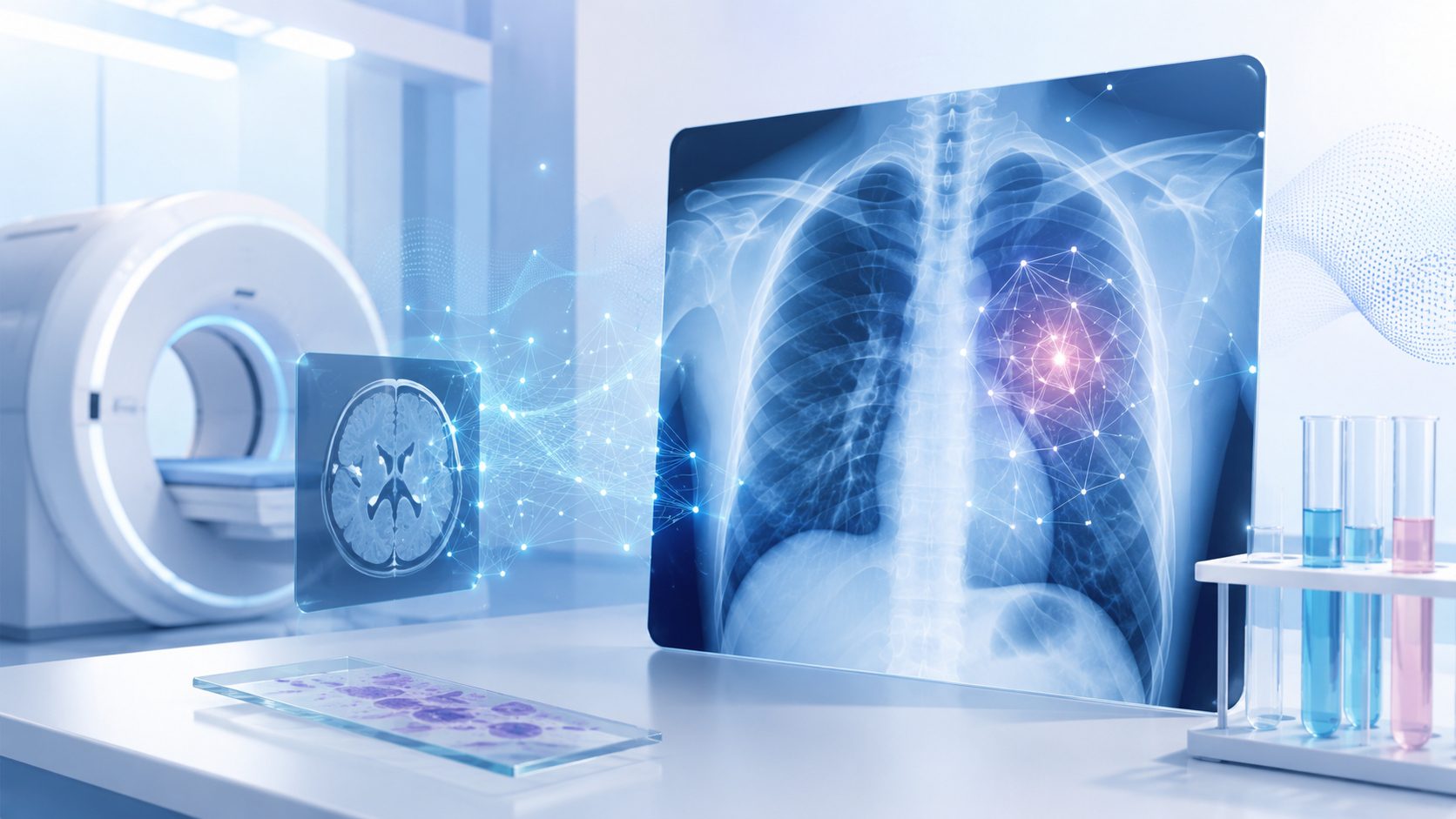
AI tools can be trained to recognize patterns in images that may suggest disease. For example, they may help identify suspicious spots in a lung scan, subtle changes in breast tissue, or signs of a stroke on brain imaging. A radiologist still reviews the image and makes the final interpretation, but the software can act like an extra set of eyes.

This is especially useful when timing matters. In cases such as stroke, internal bleeding, or certain cancers, faster detection can make a real difference in treatment options. Mayo Clinic has described how AI is being used in radiology to help process imaging data quickly and consistently, supporting doctors as they evaluate patients.

The goal is not simply speed. Accuracy matters just as much. When used carefully, these tools may help reduce missed findings and bring urgent cases to the front of the line more quickly. In a busy emergency department, that kind of support can help doctors focus their attention where it is needed most.

Spotting Cancer Earlier

Cancer diagnosis is another area where AI is receiving a lot of attention. Cancer can be difficult to detect early because some signs are extremely small or resemble harmless changes in the body. Screening programs, such as mammograms, colonoscopies, and tissue testing, already save lives, but they also require careful review by trained professionals.

AI can help by analyzing screening images, pathology slides, and other medical data for patterns linked to cancer. For example, it may help flag areas that look suspicious in a mammogram or assist pathologists as they examine tissue samples under a microscope.

The National Cancer Institute explains how AI is being explored in cancer research and care, including screening, detection, diagnosis, and treatment planning. This does not mean every cancer can suddenly be found early, but it does show how technology may support more consistent screening and diagnosis over time.

There is also promise in combining different types of information. A doctor might consider a patient’s age, family history, symptoms, lab results, and imaging. AI systems can help organize and analyze these layers of information, making it easier to spot patterns that might otherwise take longer to connect.

For patients, this could eventually mean fewer delays between a first concern and a clearer answer. It may also help doctors decide which patients need follow-up testing sooner, while reducing unnecessary procedures for people whose results look less concerning.

Making Sense of Lab Results and Patient Data

Diagnostics are not limited to images. Many conditions are detected through blood tests, urine tests, genetic testing, heart monitoring, and other forms of patient data. The challenge is that healthcare information can be scattered across different systems and collected over long periods of time.

AI can help by looking for meaningful changes or combinations in this data. For instance, it may help identify patients at higher risk of heart disease, kidney problems, sepsis, or complications after surgery. In some settings, it can alert clinicians when a patient’s results suggest something may need urgent attention.

This can be especially helpful in hospitals, where patients are monitored constantly. A single lab value may not tell the whole story, but a pattern across several tests and vital signs could suggest that a patient is getting worse. AI tools can support care teams by highlighting those patterns earlier.

There are also applications in primary care. A person may visit a doctor with fatigue, pain, dizziness, or other symptoms that could have many causes. AI-supported tools may help doctors consider possible explanations based on a patient’s history and test results, though the doctor’s judgment remains essential.

In everyday terms, this is a little like having a smart sorting system for medical information. It does not replace the person reading the results, but it can help bring important details to the surface more quickly.

The Human Side of Diagnostic Technology

For patients, the idea of AI in healthcare can feel both exciting and uncomfortable. On one hand, most people want doctors to have the best tools available. On the other hand, health is deeply personal, and nobody wants to feel like a computer is making decisions about their body.

That concern is valid. Diagnostic tools need to be tested, regulated, and used responsibly. They also need to work well for different groups of people, not just the populations used to train them. If a system performs better for some patients than others, it could worsen existing healthcare inequalities.

This is why oversight matters. The U.S. Food and Drug Administration maintains a public list of AI-enabled medical devices that have been authorized for marketing in the United States, helping provide more transparency around which tools are being used in clinical care.

Privacy is another important issue. Healthcare data is sensitive, and any technology that uses it must be handled carefully. Patients should be able to trust that their information is protected and that these tools are being used to support their care, not replace clear communication with medical professionals.

The best use of AI in diagnostics keeps humans at the center. A scan may be reviewed by software, but a doctor interprets the findings. A risk score may raise concern, but a clinician talks with the patient, asks questions, and considers the full context. Technology can support better decisions, but compassion, experience, and communication still belong to people.

Conclusion

AI is changing healthcare diagnostics in practical, behind-the-scenes ways. It can help doctors review medical images, detect signs of cancer earlier, organize complex test results, and identify patterns that may need attention.

Still, it is not a magic solution. These tools must be carefully tested, fairly designed, and used with strong medical oversight. When they work well, they do not replace healthcare professionals. They help them see more clearly, act more quickly, and provide better-informed care.

For patients, that could mean faster answers, earlier treatment, and more confidence that important details are not being overlooked. In a field where timing and accuracy matter so much, that support can be genuinely valuable.