How to Make Healthy Meals With Five Ingredients or Less
You pull up a dinner recipe that looks great, scroll down, and find seventeen ingredients. One of them is a fresh herb you’ll use exactly once before it goes slimy in the crisper drawer. Dinner just turned into a chore, and it’s only 6 p.m.
It doesn’t have to go like that. Five ingredients or fewer can still get you a meal that tastes good and fills you up, and you can actually pull it off on a Tuesday. Pick ingredients that each earn their spot, cook them simply, and you’re most of the way there.
A short shopping list has side benefits too. Fewer decisions at the store, and fewer half-used bunches of produce slowly turning into science experiments. Once you have a handful of combinations you trust, deciding what’s for dinner gets a lot less painful.
Start With the Meal, Then Count the Ingredients
Five ingredients can easily make a balanced meal, though the number by itself says nothing about whether the food is any good for you. So think about what the plate needs first. Some vegetables or fruit, some protein, and something filling underneath, like whole grains or potatoes.
Harvard’s Healthy Eating Plate guide is a handy picture to keep in your head. About half the plate is vegetables and fruit, and the other half splits between whole grains and healthy protein. It works for a bowl, a sandwich, or whatever you throw in a skillet, and you don’t need to measure anything.
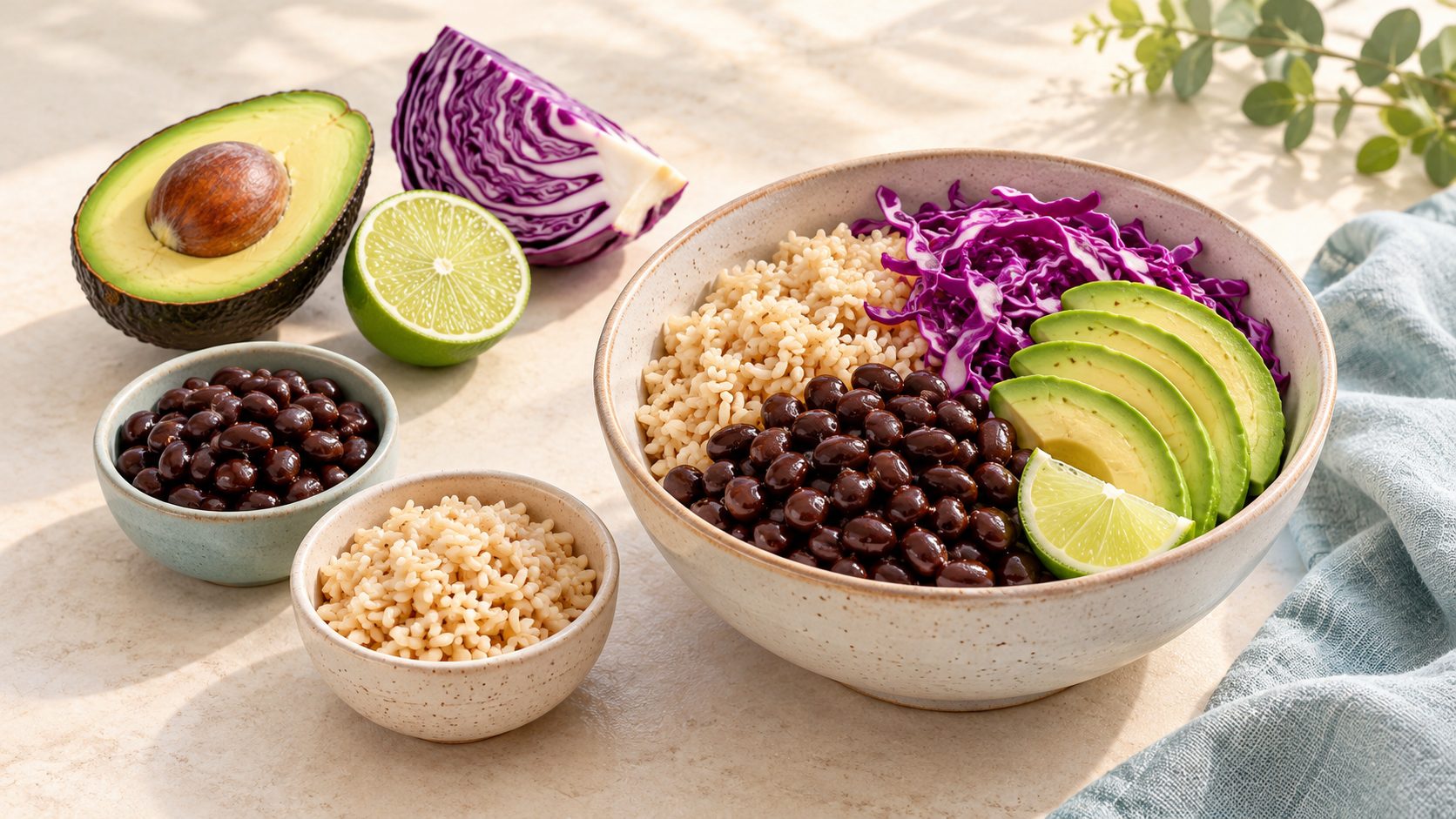
Here’s a bowl that fits: brown rice, black beans, shredded cabbage, avocado, and lime. The beans bring protein, the rice makes it filling, and the cabbage gives you crunch. Don’t portion everything equally. Put in more of whatever you’re hungriest for.
One more thing, because “five-ingredient” recipes love to cheat. In this article, oil, seasonings, and sauces all count toward the five. Water doesn’t. Otherwise you end up with a recipe that quietly demands a whole cupboard of extras.
Also, not every meal has to tick every box. What you eat across a week matters more than any single dinner, so rotate your vegetables, proteins, and grains rather than eating the same combo on repeat.
Pick Ingredients That Pull Double Duty
When the list is this short, an ingredient that does only one thing is a luxury. Beans give you protein and fiber. Plain yogurt turns into a creamy dressing. Lemon makes almost anything taste brighter. Avocado adds richness and a soft bite next to crunchy vegetables.
Shortcuts are fine here. The American Heart Association says that fresh, frozen, and canned produce can all be healthy choices, so go ahead and grab plain frozen vegetables and canned beans when you don’t feel like chopping.
It helps to keep a few staples around that you actually like to eat. Eggs, chickpeas, whole-wheat pasta, frozen broccoli, and canned tomatoes are a good start. Then pick up a couple of fresh things each week that can go in more than one meal. Spinach is a good example, since it works in eggs, pasta, or a warm bean dish.
Watch the packaged sauces. Salt levels swing a lot from one brand to the next, so read the labels, go for lower-sodium versions if you can, and taste before you add any salt yourself. The AHA also has a practical guide to reducing sodium that suggests rinsing canned beans and vegetables to wash off some of the extra salt.
Overlap is your friend. If tonight’s dinner uses half a head of cabbage, plan another meal around the other half before you go buy a different vegetable.
Let Technique Do the Flavor Work
Short ingredient lists get a bad reputation for bland food, but you can build a lot of flavor without adding a thing. Browning, roasting, and toasting all do it, and a squeeze of citrus can rescue a dish that tastes flat.
Take this pasta: whole-wheat pasta, chickpeas, broccoli, olive oil, and lemon. Boil the pasta and toss small broccoli florets into the pot near the end so they soften. Scoop out a little of the cooking water before you drain, then mix everything with rinsed chickpeas, olive oil, and lemon juice.
That starchy water coats the pasta so you don’t need a separate sauce. Grate some lemon zest in with the juice too. You get more flavor out of the same lemon.
For something warm in a skillet, try eggs, spinach, canned tomatoes, whole-grain bread, and olive oil. Heat the oil, let the tomatoes simmer until they thicken a bit, and stir in the spinach. Make little wells for the eggs, cover the pan, and cook until the whites and yolks are set. Toast the bread and use it to scoop everything up.
If you’re short on time, skip the stove. Toss rinsed chickpeas with chopped cucumber, tomatoes, plain yogurt, and lemon juice. Mash a few of the chickpeas first so the yogurt and lemon stick to everything, and leave the rest whole so it isn’t mush.
All of these have the same shape. Something filling, something fresh, and one clear source of flavor. Once you see that pattern, swapping things in and out is easy.
Settle on a Few Go-To Meals
You don’t need a folder of dozens of recipes. Pick three meals you’d be happy to eat again and again. When you’re tired and hungry, not having to decide anything is a real relief.
Think about what your week actually looks like. The no-cook chickpea bowl suits a late night, and the pasta is better when you’ve got twenty minutes and a single pot to spare. Leave yourself room to trade broccoli for another vegetable, or beans for a different protein.
Only prep what makes the next meal easier. Washing a bag of greens or setting out tomorrow’s ingredients can help more than giving up a whole Sunday afternoon to cook food you won’t feel like eating.
Healthy cooking sticks when it fits the way you live. Start with a balanced combination, make sure every ingredient has a job, and keep the methods simple enough to bring out the flavor. Five ingredients are plenty, and a dinner you like making is one you’ll make again.