How Everyday Technology Is Making Homes More Energy Efficient
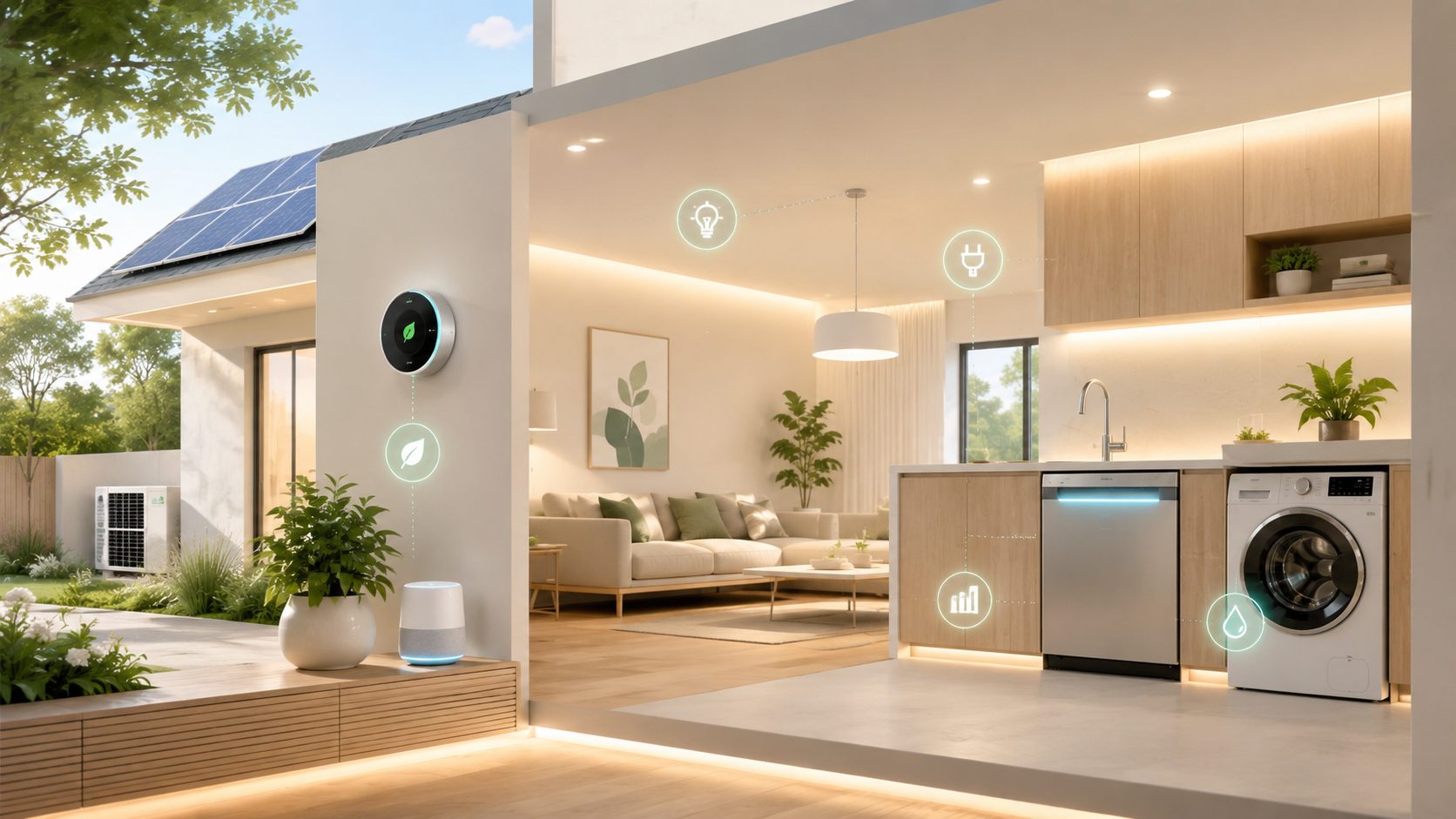
For a long time, “energy efficient home” basically meant a renovation project. New insulation, pricier windows, maybe solar panels, or ripping out the old furnace for something newer. Those projects still matter, and they still deliver, but they’re not the whole story anymore. A lot of the savings now come from stuff people already own.
Thermostats figure out when nobody’s home and adjust on their own. Lights shut off without anyone flipping a switch. Appliances run smarter instead of just running longer. Little monitoring gadgets show you, in plain numbers, where your electricity is actually going. None of these changes is dramatic on its own. Put them together, though, and a house can end up meaningfully more efficient without anyone having to overhaul how they live.
Smarter Heating and Cooling
Heating and cooling eat up more of a typical energy bill than almost anything else in the house. And the issue usually isn’t bad equipment, it’s equipment running when there’s no real reason for it to.
This is where smart thermostats earn their keep. Rather than holding one temperature around the clock, they follow a schedule, notice when the house is empty, and ease off while everyone’s asleep or out for the day.
A lot of them will also show you how often the system is actually kicking on and how your temperature settings tie into your energy use. That’s useful, because heating and cooling habits are otherwise pretty invisible.
ENERGY STAR has found that certified smart thermostats save the average household around 8% on heating and cooling costs. To earn that certification, a thermostat has to prove real energy savings using actual usage data, not just claim it because it has scheduling or remote access built in.
That said, a thermostat can only do so much. If the house is poorly insulated or the furnace itself is inefficient, no amount of smart scheduling will fully make up for it. But as a first step, especially a cheap one, better control over when the system runs is hard to beat.
Lighting and Small Devices Are Getting More Efficient
A single light bulb barely registers on an energy bill. A house full of them, though, adds up fast, which is exactly why lighting is such an easy place to find savings.
LEDs changed the math here. They put out the same amount of usable light as an old incandescent bulb while using a fraction of the electricity. The U.S. Department of Energy puts the savings at up to 90% less energy, with bulbs lasting up to 25 times longer than the old kind.
Beyond the bulbs themselves, it’s gotten easier to control when lights are even on. Smart switches, timers, and motion sensors stop lights from burning in rooms nobody’s in. A hallway light can shut off on its own after a few minutes of nothing happening. Outdoor lights can come on based on when the sun actually sets that day, instead of running on a fixed schedule that’s wrong half the year.
Electronics have a similar problem, just quieter. TVs, game consoles, speakers, chargers, they all sip power even when they’re technically “off.” The Natural Resources Defense Council has estimated that this kind of always-on idle power costs the average U.S. household around $165 a year. Smart plugs and power strips let you schedule these devices, cut them off remotely, or just see how much juice a particular gadget is actually pulling.
None of this asks anyone to think harder about saving energy day to day. If anything, that’s the point: set it up once, and the routine just runs itself from there.
Appliances Are Doing More With Less Energy
Appliances have gotten a lot smarter too. Refrigerators, washers, dryers, dishwashers, air conditioners, most of them now use sensors to adjust what they’re doing based on what’s actually needed, rather than running the same way every single time.
A washing machine can size its water use to the load instead of filling up the same amount regardless of whether you’re washing a towel or a full basket. Dishwashers can sense how dirty the dishes really are. Refrigerators can dial cooling up or down instead of just running full blast constantly.
Worth saying clearly: picking an efficient appliance still matters more than picking a “smart” one. Wi-Fi and an app don’t automatically mean lower electricity use, those are two different things entirely.
This is where Consumer Reports testing comes in handy, since it lets people compare real annual running costs across categories like refrigerators, dryers, and dishwashers rather than relying on a manufacturer’s marketing claims.
The connected features are more of a bonus layer on top. Some appliances can wait to run until a set time, ping you if a door’s been left open, or just tell you how much power they’re using. And if your utility charges different rates depending on the time of day, scheduling the dishwasher or dryer for the cheap hours can genuinely save money.
Energy Monitoring Makes Waste Easier to See
Electricity has an odd problem: you can’t see it. A leaky faucet is obvious the moment you walk by. An appliance quietly wasting power for weeks? Nobody notices until the bill shows up.
Home energy monitors are starting to close that gap. Depending on the setup, you can look at whole-house usage or drill down into specific appliances and outlets. That kind of visibility catches things you’d otherwise never think to check, like something running all night that shouldn’t be, or a device pulling way more power than it has any business pulling.
Some systems go further and tie thermostats, lighting, and outlets together into one platform, one that can schedule devices, flag ways to cut usage, and automatically control equipment based on whether a room is actually occupied.
None of this is really about having the most connected house on the block. Piling on gadgets for their own sake just adds cost and one more thing to maintain. The technology that’s actually worth having solves a specific problem: a thermostat that stops unnecessary heating, a sensor that catches a light someone forgot, a monitor that flags where the waste is hiding.
Small Improvements Can Add Up
An efficient home doesn’t need to look like something out of a tech showroom. More often, efficiency just comes down to ordinary devices making slightly better decisions in the background, over and over, without anyone having to think about it.
Smart controls, efficient LEDs, better appliances, and monitoring tools all cut down on waste without asking much of the people using them. They work best paired with the basics people have always done: turning things off when they’re not needed, keeping the HVAC system maintained, and replacing old appliances with efficient ones when the time comes.
The bigger shift here is really about where the responsibility sits. Instead of counting on people to remember every little conservation habit, the technology increasingly just handles it, quietly making energy efficiency something that happens by default rather than something anyone has to work at.