Public Wi-Fi Risks: How to Work Safely From Cafés, Hotels, and Airports
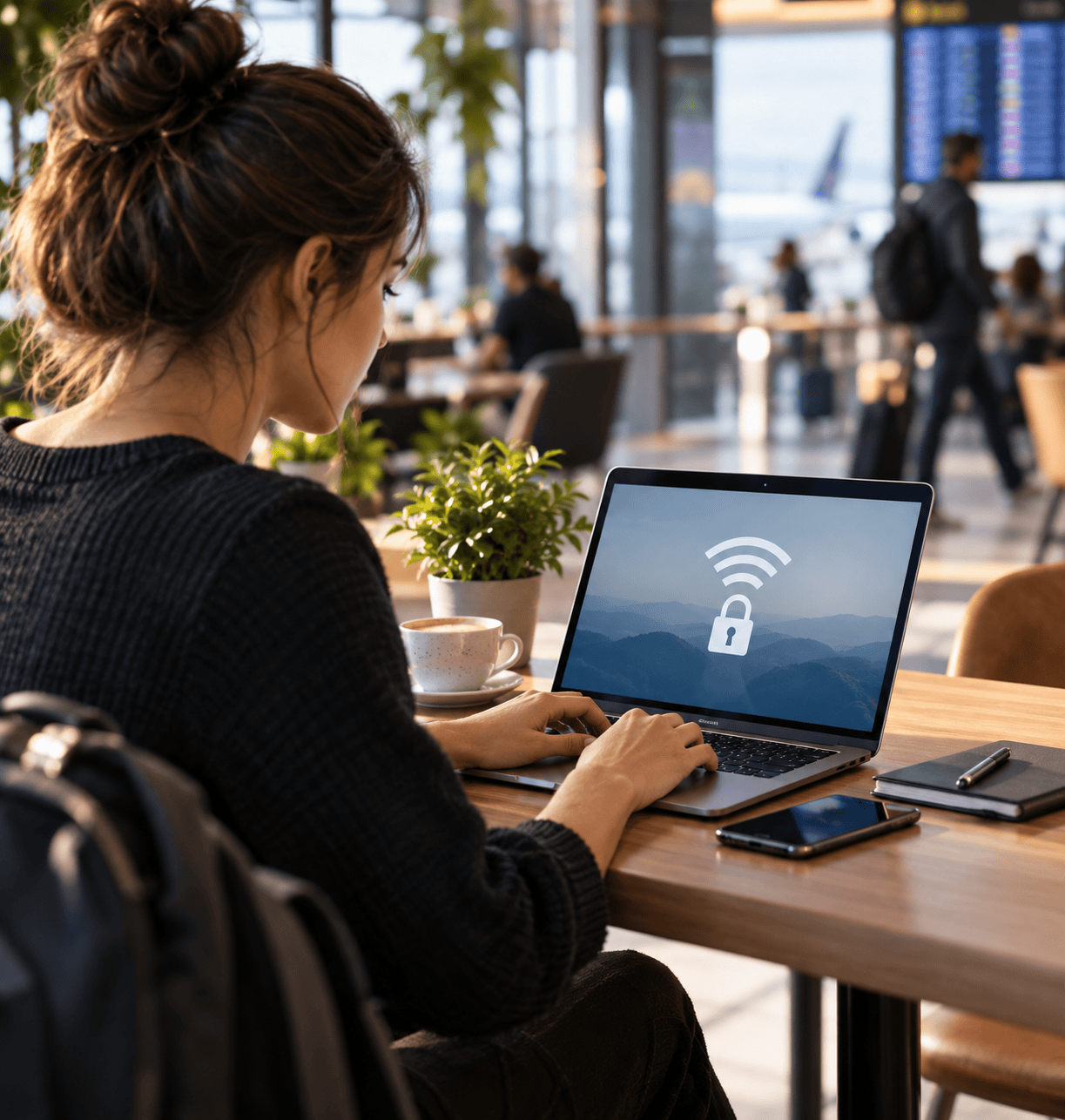
Working remotely no longer necessarily means working from home. A laptop and an internet connection can turn a café, hotel lobby, coworking space, or airport terminal into a temporary office.
That flexibility is convenient, but it also creates security risks that are easy to overlook. Public networks and busy shared spaces can expose work accounts, passwords, and sensitive information in ways that rarely happen in a traditional office.
The good news is that a few simple habits can make working on the go considerably safer.
A Familiar Wi-Fi Name Does Not Mean the Network Is Safe
When you arrive at a café or hotel, connecting to the Wi-Fi network with the most familiar-looking name may seem harmless. Unfortunately, attackers can create fake access points designed to look like legitimate networks.
These are sometimes called “evil twin” networks. An attacker creates a hotspot with a name that closely resembles the real network, hoping that visitors will connect without checking.
Once connected to an attacker-controlled network, users may be redirected to fake login pages or put their internet traffic at risk of interception.
Before connecting, verify the correct network name with an employee or another trusted source. It is also a good idea to disable automatic connections to public Wi-Fi networks so your device does not join one without your knowledge.
Phishing Becomes More Dangerous Away From the Office
Phishing is not limited to suspicious emails. Attackers increasingly use realistic login pages, text messages, collaboration tools, and other methods to trick people into revealing credentials.
Remote workers can face an additional problem: they may not have a colleague or IT team sitting nearby when something looks suspicious.
If an unexpected message asks you to log in, reset a password, approve an MFA request, or open a document urgently, slow down. Instead of following the link in the message, access the service directly through its official website or app.
For a broader look at these risks, the ExpressVPN guide to staying secure while working remotely covers phishing, fake Wi-Fi networks, account security, and device protection across home, café, hotel, and airport environments.
Protect More Than Your Internet Connection
Network security is only one part of working safely in public.
Someone sitting nearby may be able to see confidential information on your screen or watch you enter a password. A laptop or phone can also disappear surprisingly quickly if it is left unattended.
Position your screen carefully in crowded spaces and avoid opening highly sensitive information when strangers can easily see your display. A privacy screen can also reduce visibility from the side.
Whenever you step away, lock your device or take it with you. Full-disk encryption and device-location features can provide additional protection if a laptop or phone is lost or stolen.
Strengthen Your Accounts Before You Travel
Some of the most effective security measures should be set up before you ever connect to public Wi-Fi.
Use a unique password for every important account and consider using a password manager rather than remembering dozens of credentials yourself. Enable multi-factor authentication wherever possible, preferably through an authenticator app or another strong authentication method.
Software updates matter too. Keeping your operating system, browser, and applications current helps close known security vulnerabilities that attackers may otherwise exploit.
A Few Extra Seconds Can Prevent a Much Bigger Problem
Working from anywhere can be one of the biggest advantages of remote work, and using public Wi-Fi does not have to mean constantly worrying about cybersecurity.
The key is not to automatically trust a network, message, or login page simply because it looks familiar.
Verify the network before connecting, be cautious with unexpected requests, protect your accounts with strong authentication, and keep physical control of your devices.
Those small habits take only a little extra time, but they can make a major difference when your office for the day happens to be a café table or an airport lounge